What is exam stress? Signs, causes, and what helps
Exam stress is your mind and body reacting to the pressure of an exam. It can show up as worry, tension, poor sleep, headaches, stomach aches, or trouble concentrating. Some nervousness is common. It is worth acting on when it is hard to manage, keeps going, or gets in the way of everyday life. Small practical steps can help, and so can telling someone. [1] [2]
Stress, anxiety, and test anxiety
Stress is the physical or mental response to something demanding, such as a lot of homework or an important test. Anxiety is closely related: it is the body's reaction to stress, and it can continue even when there is no immediate threat. [1]
Exam stress is not a diagnosis. It is a way of describing that pressure when it centres on tests and results. You may also see the term "test anxiety", which researchers use for worry and tension that build up specifically around being tested. The two overlap, and you do not need to decide which label fits before doing something about it.
How can exam stress show up?
NHS guidance lists signs such as worrying a lot, feeling tense, headaches and stomach pains, not sleeping well, irritability, changes in appetite, and losing interest in things. [2]
Everyone's mix is different. Some people feel it mainly in their body, some in their thoughts, and some notice it first in what they do, such as avoiding revision or checking notes over and over.
These signs can have other causes too. If a physical symptom worries you, or it does not ease once the pressure passes, talk to a doctor rather than assuming it is exams.
| Where you might notice it | Examples |
|---|---|
| Body | Tension, headaches, stomach aches, feeling sick, poor sleep |
| Thoughts | Constant worry, imagining the worst result, going blank |
| Mood | Irritability, feeling low, feeling on edge |
| What you do | Avoiding revision, over-checking, skipping meals or breaks |
What makes exam stress heavier?
A large review of test anxiety research found that it was higher when a test was seen as difficult or high-stakes, and when students had lower self-esteem. It also found that test anxiety was linked to somewhat lower exam scores and grades, though the links were small to moderate, so anxiety does not decide your result. [3]
Other pressures matter too: expectations from family or school, comparing yourself with others, a packed timetable, money worries, caring responsibilities, or not having a quiet place to study. Some of these are outside your control. Naming them can still help you and the people supporting you see what is really going on.
One thing to try today
You do not have to fix everything at once. Choose the part that fits where you are right now.
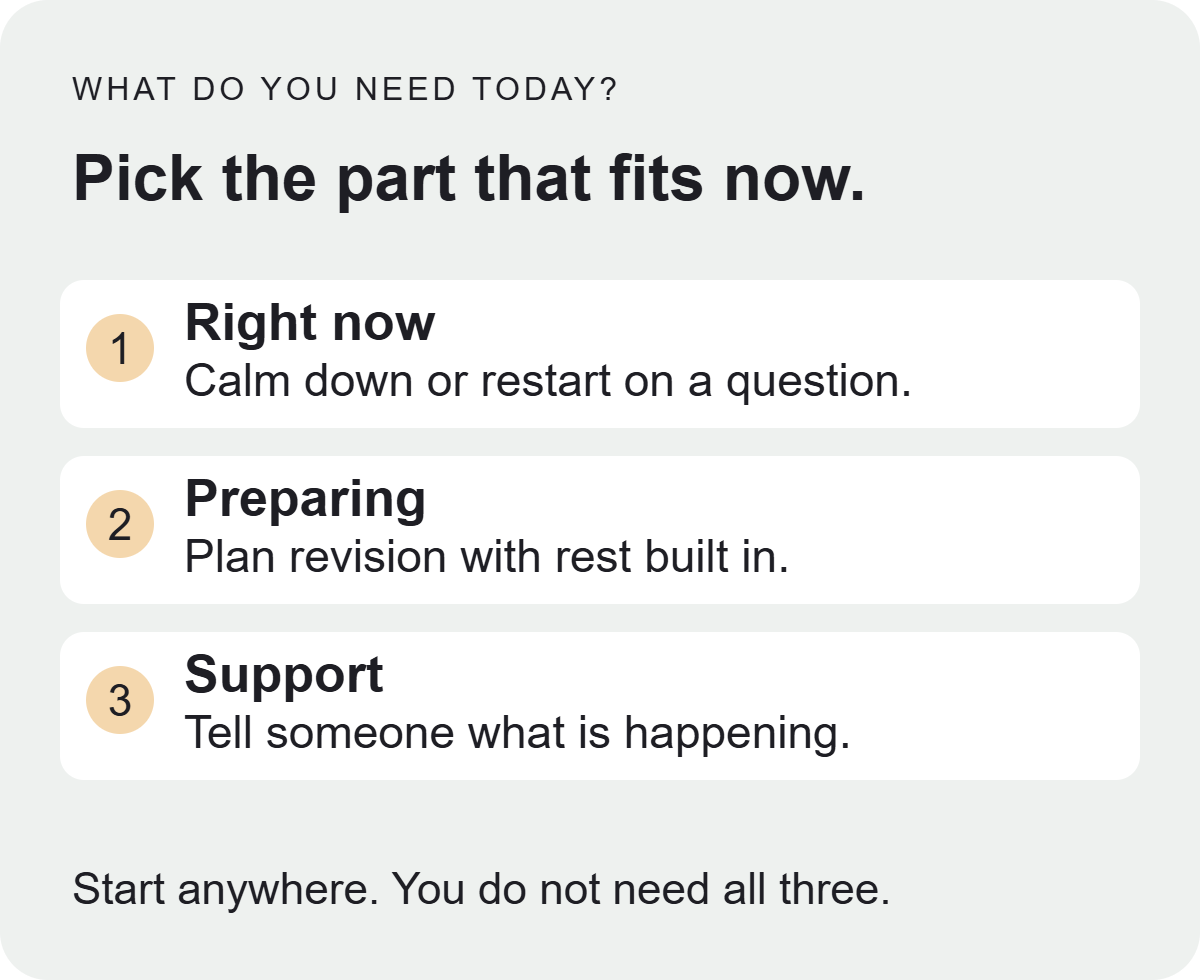
If you are too tense to start, try a short, comfortable breathing or grounding exercise, then pick one small task. If your mind went blank in a practice paper, look at how to restart on a question. If the night before is the problem, plan a stopping point.
How to calm down before an exam
Preparing over the coming weeks
A realistic plan can take some of the guesswork out of revision. Build in breaks, meals, and time off, rather than filling every hour. NHS guidance also suggests regular exercise, a balanced diet, and enough sleep, and warns that cramming all night before an exam is usually a bad idea. [2]
Testing yourself, for example with practice questions or recalling a topic without notes, tends to be more useful than rereading. It also shows you what you actually know, which can make the exam feel less like a leap into the unknown. [5]
- Write down your exams and fixed commitments first, then fit revision around them.
- Work in short blocks with a clear task for each one.
- Keep something in each day that is not revision.
- Protect sleep, especially in the last few nights.
When to ask for help
Consider talking to someone if the stress feels hard to manage, keeps coming back, makes you avoid things, or affects sleep, eating, or daily life. You do not have to wait until it gets worse, or until your grades slip. [1] [2]
A teacher, tutor, school or college counsellor, doctor, or someone you trust at home can help. In trials with university students, structured support for test anxiety, such as behaviour therapy, reduced it more than no support, though the studies had limitations. [4]
If you might harm yourself or cannot keep yourself safe, contact emergency services or an urgent mental health service now.
Sources and further reading
These links open external research and health-information websites.
- NIMH: I'm so stressed out! fact sheet
Defines stress and anxiety, lists coping ideas, and describes when to seek professional help. Service details are US-specific. - NHS: help your child beat exam stress
Signs of exam stress in young people, sleep, food, and exercise advice, and when to contact a GP. - von der Embse and colleagues (2018): test anxiety effects, predictors, and correlates
Meta-analysis of 238 studies. Links between test anxiety and performance were small to moderate. - Huntley and colleagues (2019): interventions for test-anxious university students
Meta-analysis of 44 randomised trials. Found evidence of publication bias and poor reporting, so results should be treated with caution. - Dunlosky and colleagues (2013): effective learning techniques
Review rating practice testing and spreading study over time as high utility, and rereading as low utility. It measured learning, not stress.
This article is educational. It is not a diagnosis or a treatment plan. If stress is affecting sleep, eating, or safety, talk to a GP, counselor, or local mental-health service.